
Archive note
December preparation flow
By December 24, 2024, the work was focused on a simple engineering task: separate TX and RX, check that the receiver stream is stable, and save each short run in the same structure for later review.
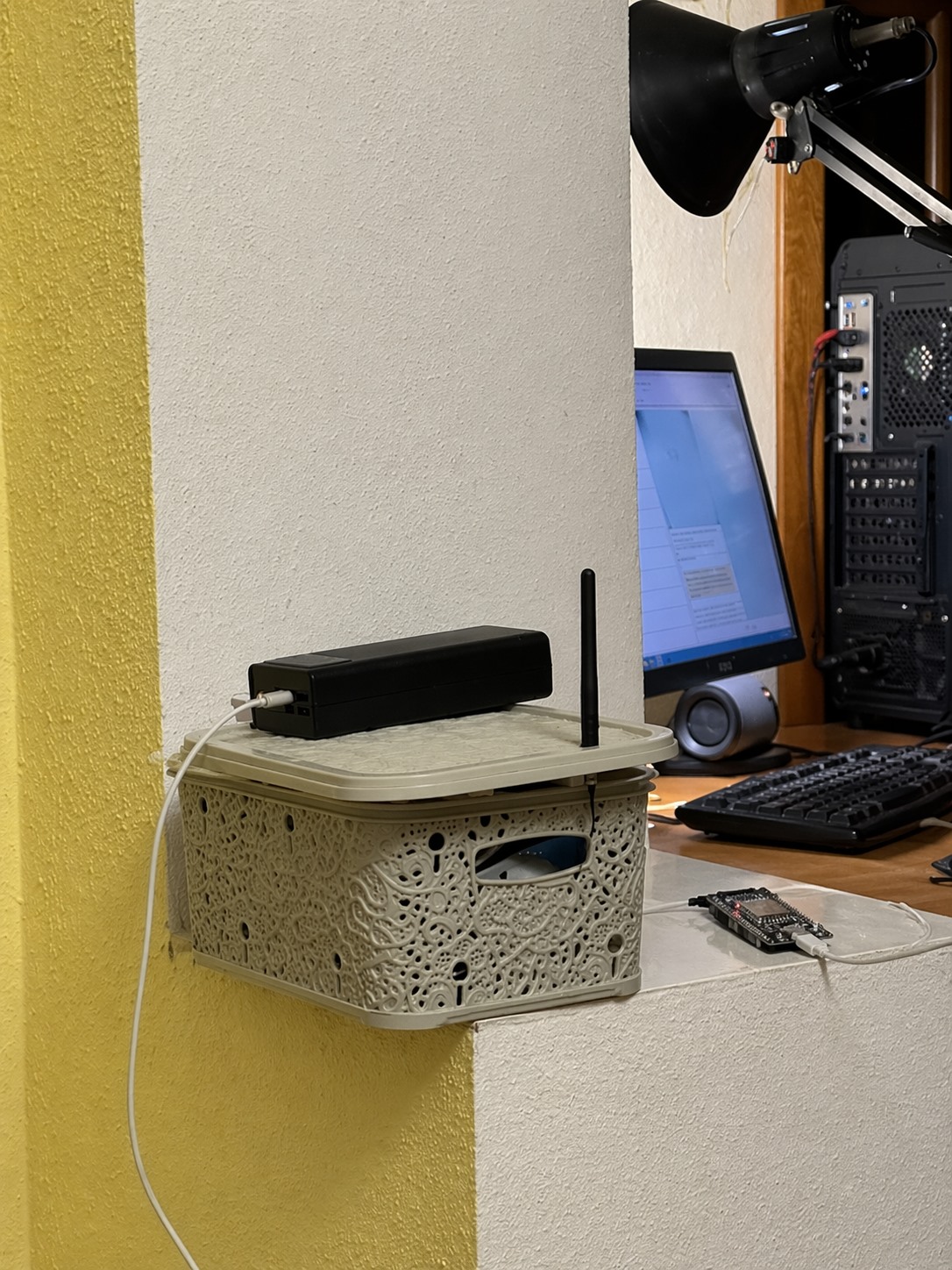 RX
RX
The first step was to keep the test narrow. One transmitter created regular packet activity, one receiver collected channel measurements, and node positions stayed fixed during a short run. That made it clear what each log was being compared against.
The second step was logging. RX exposed a raw structured stream, and the host saved it as CSV together with collector events, raw output, errors, and a short summary. The goal was not a large dataset; the goal was to know whether the capture path worked the same way twice.
The third step was review. At this stage the notes stayed close to the setup itself: whether the node started, whether the stream continued, whether parsing failed, and whether the next run could be made under the same conditions.
Basic bench topology
The preparation started by separating the prototype into two clear roles: TX created repeatable packet activity, while RX joined the same 2.4 GHz network, enabled radio-channel capture, and exposed a structured stream for the host laptop. This kept the experiment readable: one node stimulates the channel, the other records it.
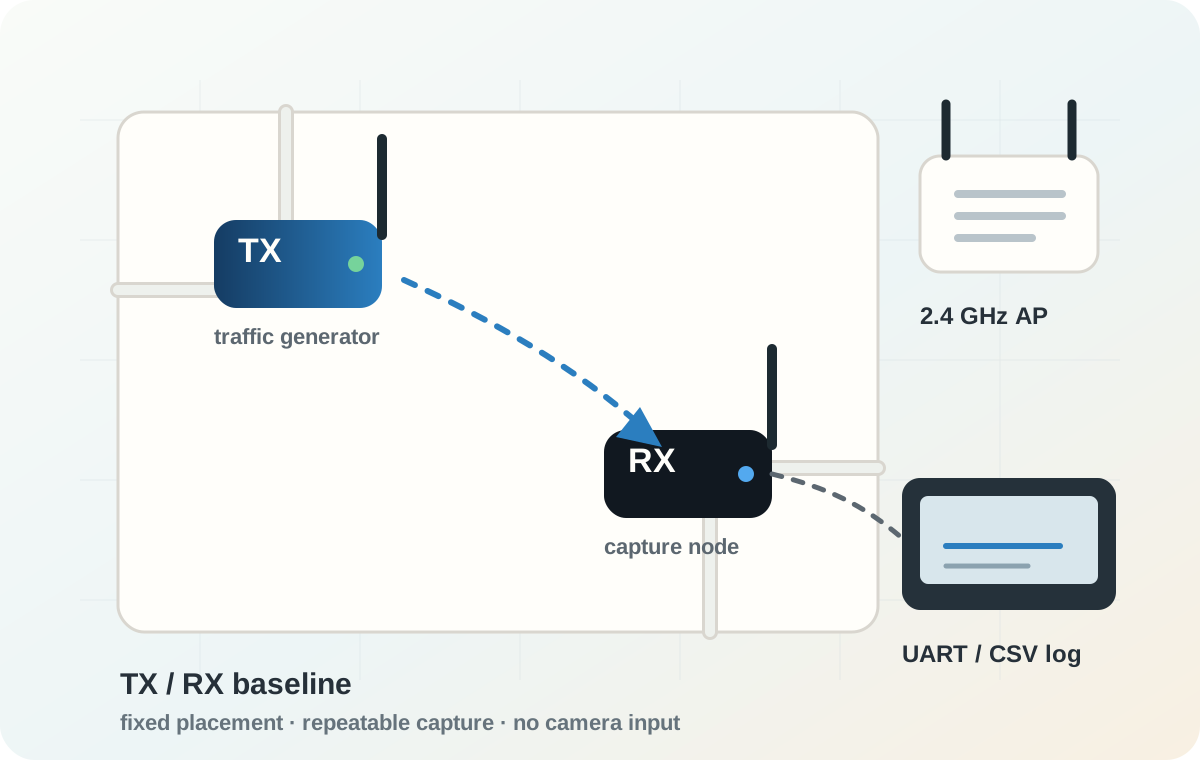
The useful result at this stage was a controlled capture routine: prepare RX, verify the serial stream, start TX, run a short capture, and save the outputs in a session folder that can be reviewed later.
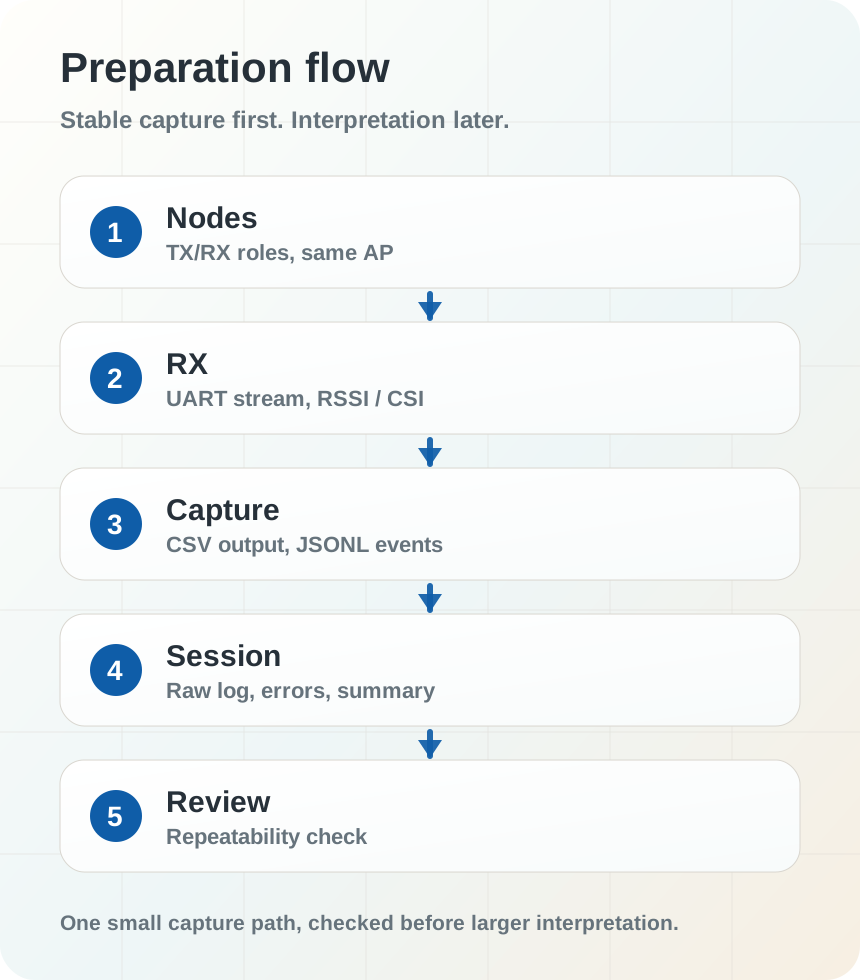
Data capture flow
Each test session could include the raw receiver stream, parsed CSI CSV, structured JSONL collector events, parse errors, raw logs, summary metadata, and host diagnostics. Short smoke runs could be limited to a fixed frame count, which made early checks easier to compare without turning every trial into a large dataset.
What this gave us
By December 24, 2024, the setup was no longer just loose hardware on a table. There was a repeatable TX/RX procedure, a receiver-labeled live example, and a logging path that preserved what happened during each run.